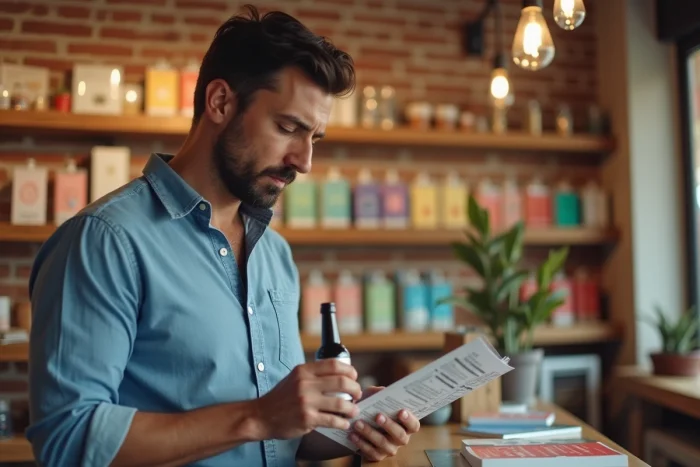
In Spain, sometimes a simple bottle can land you in the middle of a legal tangle. The sale of poppers is tolerated in certain shops, although their marketing as inhalable substances is prohibited. The penalties related to use or transport vary by region and how law enforcement interprets the law, making the situation uncertain for those traveling or purchasing on-site.
France, for its part, applies a distinct legal framework regarding the possession and sale of poppers, often more restrictive. In other European countries, the rules change even more, creating a shifting map of regulation. As for CBD, its cross-border movement raises other questions, as laws differ from one country to another. Before traveling across Europe with these products, it is advisable to thoroughly understand the risks and current practices.
Overview of poppers and CBD legislation in Europe: where do we really stand?
A topic of passionate debate, poppers, this small bottle of nitrites, does not have the same status everywhere in Europe. From country to country, the rule changes. In France, the product has long been tossed between total prohibition and conditional tolerance, before finally being regulated. Specialized shops can sell it, but under specific conditions. Across the Rhine, Germany remains uncompromising: it is impossible to buy it legally, even if the police do not systematically track consumers. Italy adopts a similar attitude, while in the Netherlands, it is possible to find poppers in certain sex shops or dedicated stores.
Spain, however, is an exception. Poppers can be found in many establishments, often sold under the label “leather cleaner” or “aroma,” in an attempt to circumvent the legal ambiguity surrounding these substances. But beware: Spanish law does not expressly validate the recreational use of poppers. Those tempted to buy poppers in Spain should therefore inquire precisely about local practices. Depending on the region, tolerance varies, and while personal possession may go unnoticed, resale or transport of large quantities exposes one to legal troubles.
CBD is not exempt from this regulatory mosaic. In Switzerland or Luxembourg, CBD products circulate freely, while in France or Italy, the framework frequently shifts between temporary authorizations and occasional bans. Transporting CBD or poppers between countries remains risky: a customs search can lead to confiscation or even penalties, depending on the strictness of the country.
Spain’s stance on poppers: what the law says and what to know before buying
Regarding poppers, Spain occupies a unique position. The legislation does not directly mention the product, but the market has adapted: to avoid being classified as inhalable substances, the bottles are sold under technical names, “leather cleaner” or “aroma.” As long as there is no indication of recreational use, authorities generally turn a blind eye to the sale of these items. However, the law strictly prohibits the marketing of products explicitly intended for inhalation, and any reference to this use should be avoided.
If you plan to buy poppers in Spain, it is strongly advised to inform yourself about the practices in the region where you are staying. Some autonomous communities tolerate personal use in small quantities, while others enforce stricter controls. Law enforcement primarily intervenes in cases of suspected trafficking or possession of multiple bottles.
Here are some essential points to keep in mind for buying without taking unnecessary risks:
- Ensure that the product is labeled “leather cleaner” or “aroma,” as this is the norm in specialized aisles.
- Check the composition and origin of the bottle to avoid illicit substances or unauthorized nitrites.
- Absolutely avoid any purchases from street vendors or outside official channels.
The poppers guide in Spain therefore recommends staying vigilant. Customs checks are rare for strictly personal use, but as soon as it involves importation or quantities deemed suspicious, surveillance becomes much stricter. The apparent flexibility of some merchants actually masks an unstable legal framework, subject to change based on local or national decisions.

Traveling between France and Spain with poppers or CBD: precautions and legal implications
Crossing the Franco-Spanish border with poppers or CBD involves navigating two sometimes contradictory legislations. In France, the sale of poppers is subject to strict rules, set and regularly adjusted by the Council of State. Customs checks pay particular attention to the quantity transported, a potential sign of trafficking. For CBD, France only accepts extracts containing less than 0.3% THC, while in Spain, the sale is more lenient, but recreational use remains legally ambiguous.
Before hitting the road, consider the quantity you are carrying. A single bottle of poppers for personal use generally does not trigger customs intervention. However, transporting a dozen bottles may be enough to attract attention and prompt a search, or even a procedure for suspected trafficking. French customs are particularly vigilant upon returns from Spain, often perceived as more permissive. The effects of poppers, such as vasodilation, hypotension, and dizziness, explain this heightened scrutiny by health authorities.
To limit risks during travel, here are some practical tips to follow:
- Keep the bottle in its original packaging, without attempting to conceal it.
- Never mention any diverted use, even during a check.
- If transporting CBD, request a precise analysis of the THC level, provided by the seller.
Europe has not yet harmonized the rules on this subject: each country retains its thresholds, criteria, and methods of control. A simple car trip can lead to a thorough inspection. Traveling with poppers or CBD therefore requires heightened vigilance, a perfect understanding of local laws, and strict adherence to permitted quantities. A prudent choice to avoid a few milliliters spoiling the crossing of a border.