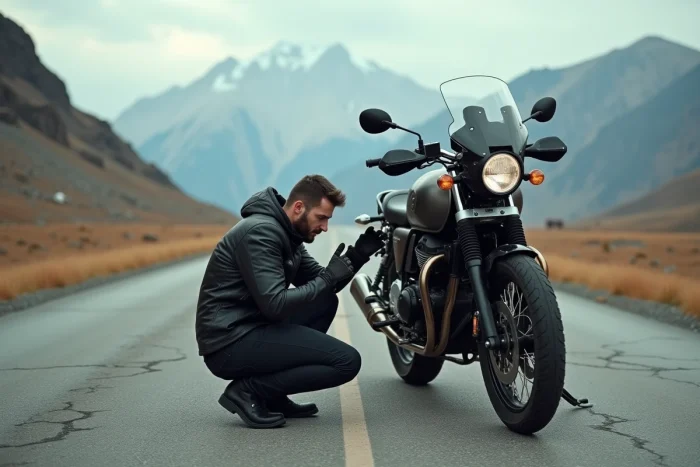
The capacity of a motorcycle’s fuel tank directly determines the number of kilometers between two stops at the pump. In today’s market, the differences are considerable: some roadsters only have about fifteen liters, while adventure trails exceed twenty liters by a large margin. Understanding these differences requires looking beyond the simple volume displayed on the technical sheet.
Engine consumption and Eco modes: the tank no longer solely determines range
A large tank offers a raw advantage in liters carried, but the electronic management of the engine now weighs as heavily as the volume in the equation of range.
Several manufacturers now offer Eco engine modes that significantly reduce consumption. Road tests of 2025-2026 models show that the gain in range comes more from this engine management than from a larger tank. A motorcycle equipped with a 17 or 18-liter tank can thus achieve ranges close to 300 km, a figure once reserved for large GTs.
This evolution particularly concerns mid-range road bikes and recent trails. To find out which motorcycle tank capacity is best suited to your use, it is necessary to cross-reference the tank volume with the actual consumption reported by the manufacturer, and not just look at the number in liters.
Declining motorcycle tank sizes: why manufacturers no longer aim for maximum volume
An unexpected observation is emerging regarding recent ranges. The tank capacity is no longer increasing in the majority of new models. It even tends to stagnate or even slightly decrease in some segments.
Two factors explain this trend:
- Anti-pollution standards push manufacturers to lighten their machines. A smaller tank reduces the total weight in running order, which facilitates homologation and improves dynamic behavior.
- Neo-retro and classic motorcycles from 2025-2026 focus on a smaller but ergonomic and sculpted tank, to enhance riding position and style. The Triumph Bonneville T120, for example, prioritizes a narrow and aesthetically designed tank over a large travel-type volume.
- Improvements in engine efficiency partially compensate for the loss of volume. Engineers prefer to optimize combustion rather than add liters to the tank.
Modern roadsters like the QJ Motor SRK 800 (scheduled for 2026) remain around a 15-liter tank, while many large trails from the 2000s exceeded 20 liters by a large margin. The trend is clear: the market accepts more modest tanks if the actual range remains satisfactory.
Adventure trails and GTs: motorcycle categories where tank size remains a selling point
While volume decreases in many segments, two categories stand out. Adventure trails and large touring bikes retain generous tanks, often well above average.
Among adventure trails, some models exceed 20 liters by a large margin, while large touring bikes generally hover around this threshold. These volumes are calibrated to cover long distances without fuel stops.
Real-world range: significant discrepancies based on riding style
Feedback from owners reveals significant gaps between theoretical range and real-world range. Riding style, load (passenger, luggage), type of road, and even tire pressure influence consumption.
An adventure trail loaded for a two-person trip consumes significantly more than when used solo on open roads. The ratio between liters carried and kilometers traveled varies greatly from one model to another, and usage conditions (altitude, wind, temperature) add a margin of uncertainty that is difficult to quantify generally.
Choosing a motorcycle based on tank range: three often overlooked criteria
The technical sheet does not tell the whole story. Before focusing on the number of liters, three parameters deserve attention.
The first is the shape of the tank and its influence on ergonomics. A large but poorly designed tank can hinder knee grip or make the motorcycle uncomfortable over long distances. High-end touring motorcycles pay attention to this aspect, unlike all entry-level machines.
The second concerns accessibility to gas stations along the planned route. On highways in France, this question rarely arises. On trails or secondary roads abroad, a 15-liter tank can become a real constraint, even with controlled consumption.
The third parameter is the additional weight of the fuel. One liter of gasoline weighs about 750 grams. The difference between a 15-liter tank and a 30-liter tank represents more than 11 additional kilograms in running order, with a full tank. On a lightweight motorcycle like a roadster or scrambler, this extra weight alters handling in turns and braking.
The current motorcycle market offers very different compromises depending on the categories. Sportbikes and roadsters focus on lightness with compact tanks. Adventure trails and GTs prioritize range at the cost of higher weight. Neo-retro bikes sacrifice a few kilometers for a well-designed tank. None of these approaches is better than the others: it all depends on daily mileage, the type of trips, and tolerance for frequent stops at the pump.