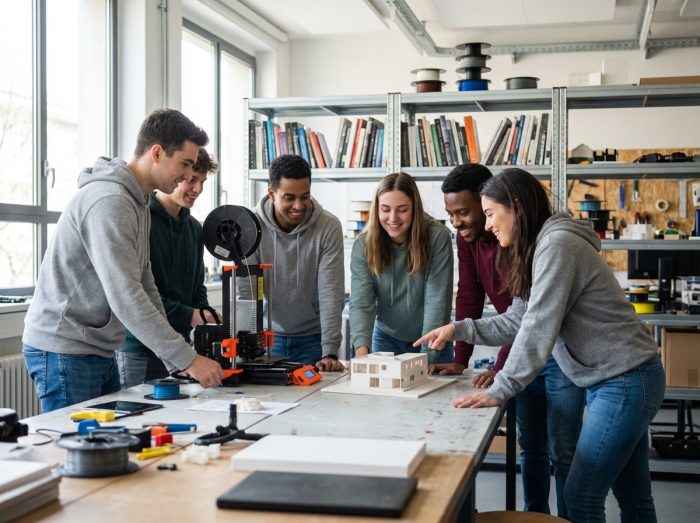
At a time when some high schools are equipping themselves faster than others, additive manufacturing is becoming a key skill expected of many students. Funding is increasing, printers are blooming in institutions, but the educational deployment is progressing at different speeds. Behind the display, a reality: teacher training does not always keep pace, and depending on the fields, 3D is sometimes firmly established, sometimes on the margins.
In response to this surge, educational content publishers are revising their offerings to meet demand. However, the gap is widening: in some areas, maintaining equipment becomes a headache, exacerbating the divide between urban and rural zones.
Why 3D is increasingly essential in schools and universities
The deployment of 3D technologies in educational institutions is gradually transforming learning methods. 3D printing and additive manufacturing are no longer reserved for specialized laboratories: they are now integrated into educational pathways, from middle school to university. Modeling workshops, collective projects, introduction to digital design… these practices open new perspectives for learning differently.
Disciplines are embracing it: modeling a molecule in biology, designing a model in technology, or creating a prototype in a BTS program. Students manipulate, experiment, and give a concrete dimension to sometimes abstract concepts. This active approach fosters creativity and strengthens the role of practice in learning.
In this context, the reflection on 3D technology and its role in education takes on particular importance. Several analyses show how these tools can be integrated into curricula and support the evolution of teaching practices: should 3D printing be generalized in institutions or reserved for certain pathways? How can we prepare students for the jobs of tomorrow while preserving fundamental educational objectives? Beyond equipment, it is the entire pedagogical approach that is evolving.
To illustrate this upheaval, let’s summarize the major transformations brought about by the adoption of 3D in training:
- Practical mastery of advanced digital skills
- New pedagogical dynamics: autonomy, experimentation, and collaborative projects
- Curricula that adjust to the demands of current industrial, artistic, and creative sectors
What concrete benefits for students and teachers?
The emergence of 3D technologies in the classroom changes the game. With interactive tools, learning becomes alive: moving from idea to prototype, manipulating objects made on-site, or exploring augmented models stimulates students, not just in technological fields. Even in general high schools, these methods rekindle interest and engagement.
On the teachers’ side, the scope of action widens. Personalizing materials, modulating student progression, introducing experimentation: 3D paves the way for differentiated pathways. Through concrete projects, students cooperate, invest in teamwork, and refine their problem-solving abilities, well-guided by their teachers but free to explore.
Here are the main levers of impact on student motivation and development:
- Strengthening autonomy through project-based learning
- Curiosity and a taste for innovation valued on a daily basis
- Acquisition of transversal skills through manipulation and digital tools
Virtual reality adds an immersive dimension that few traditional methods offer. We move from theory to practice instantly: visualizing environments, exploring scenarios impossible to recreate in a traditional classroom. Digital is no longer a gadget; it becomes the foundation of an enriched, modern, shared educational experience.
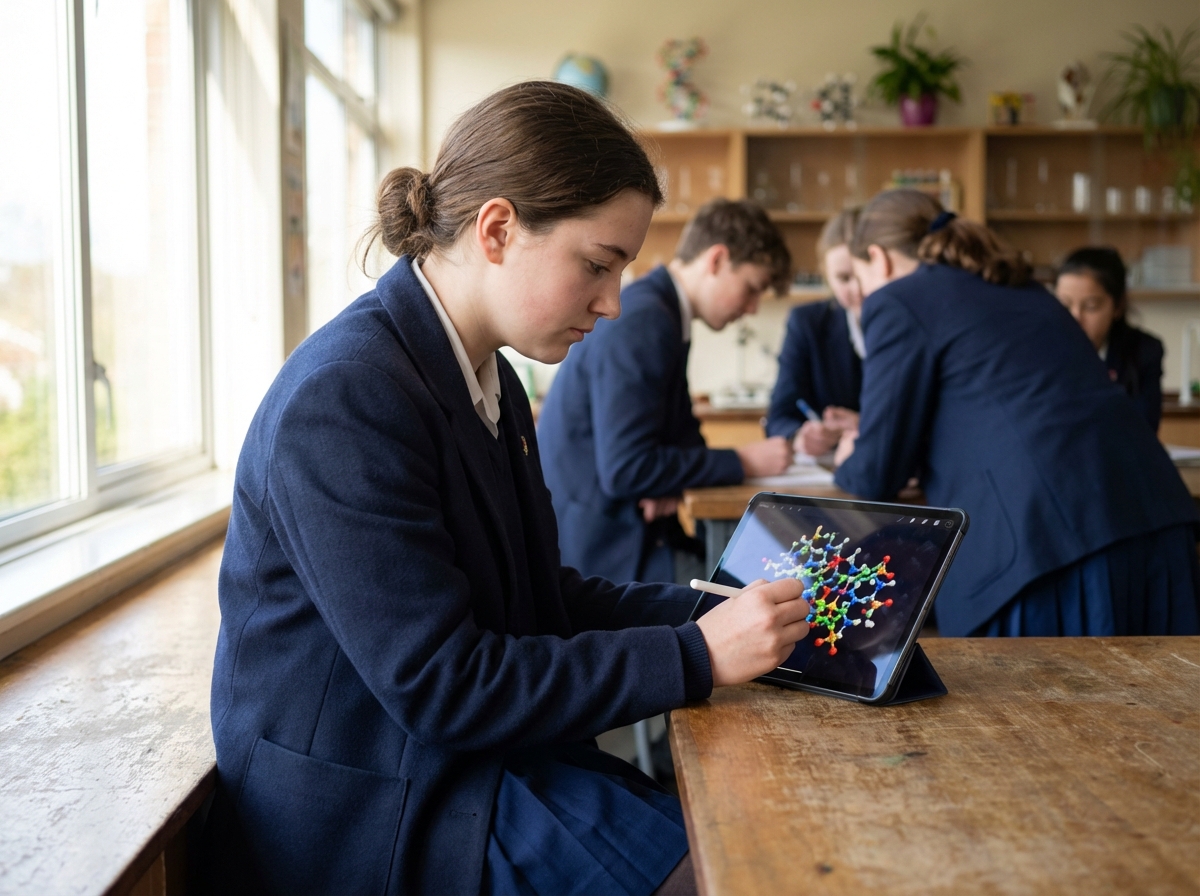
Challenges to overcome and ways to integrate 3D printing into your educational projects
Implementing 3D printing in schools or universities involves dealing with real difficulties. The first obstacle: training in the tools. Teachers from traditional fields have rarely been introduced to modeling, machine maintenance, or technical management. Added to this is the diversity of software, formats, and maintenance requirements, which demand new skills.
On the logistical side, nothing is simple. Choosing suitable printers, organizing spaces, ensuring safety, managing supplies… All of this weighs heavily on a daily basis. Teams, often understaffed, must reinvent their organization so that technology serves pedagogy, not the other way around.
But the success of 3D does not depend solely on equipment: the challenge is the collective skill development, the creation of networks among teachers with different expertise, and the integration of digital tools into substantive projects. It is these dynamics that allow for the sustainable establishment of a culture of innovation in schools.
To move forward despite the obstacles, several avenues are emerging:
- Integrate 3D progressively into pedagogical sequences throughout the school year
- Share equipment and resources between different disciplines and groups of teachers
- Emphasize active learning, direct manipulation, and collective experimentation
Ultimately, success relies on the emergence of a cohesive educational community, ready to explore, test, and question itself. 3D technology is neither an end nor a passing trend: it paves the way for a school that is transforming to prepare its students to invent the future.