The professional skincare market in salons is undergoing a silent transformation. Cabin protocols no longer just correct visible signs of aging or offer a moment of relaxation: they are repositioning around prevention, personalization, and instrumental skin analysis. This evolution is changing the relationship between the client and the beauty professional, redefining what it means to “enhance” one’s skin in 2025.
Skin longevity: when facial treatments shift from correction to prevention
The most significant trend in recent years in salons is not about a new cream texture or a miracle active ingredient. It concerns a change in philosophy: preserving skin capital rather than repairing damage. The concept of “skin longevity” now permeates the professional protocols offered in cabins.
Specifically, this approach targets three areas that have rarely been worked on together before: repairing the skin barrier, reducing chronic low-grade inflammation, and preventing glycation, a process where sugars alter collagen fibers. Groups like Estée Lauder Companies and Shiseido have publicly repositioned their professional ranges around these mechanisms, with dedicated cabin protocols presented at recent dermatological congresses.
For clients visiting a salon, brands offering skin longevity treatments on kristal-beaute.com illustrate this transition towards services focused on skin sustainability rather than just immediate radiance.
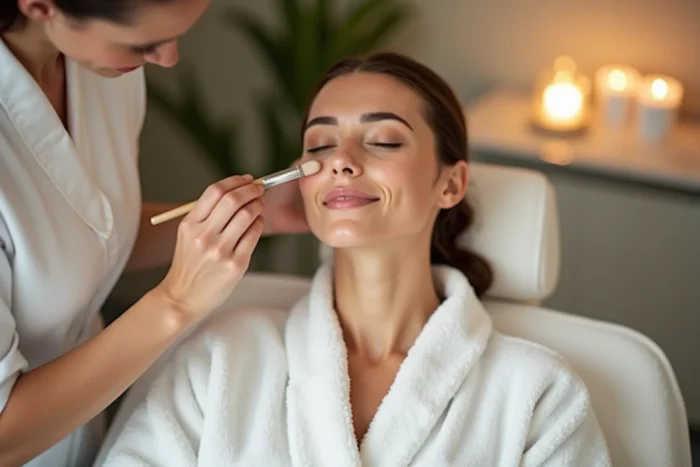
This shift has a direct consequence on in-salon advice: the professional no longer recommends a facial treatment solely based on skin type (oily, dry, combination), but also assesses the level of exposure to inflammatory factors and the stage of cellular aging. The treatment becomes an act of prevention, not just correction.
AI skin diagnostics in salons: what it really changes
The use of AI to analyze skin is no longer limited to consumer applications that provide an approximate “assessment” via a smartphone camera. In salons, professional devices like the VISIA Gen7 or the Observ 520x now integrate AI-assisted analysis modules.
These devices use multispectral cameras capable of photographing the skin under different wavelengths. AI then intervenes to automatically score several parameters: pigmentation spots, diffuse redness, wrinkle depth, enlarged pores, hydration levels. The result is not just a simple visual diagnosis, but a quantified report that guides the choice of cabin protocol.
Current limitations of automated diagnostics
Field feedback varies on the reliability of these tools depending on phototypes. On very light or very dark skin, scoring algorithms may lack precision, as training databases remain unbalanced. A trained professional remains the essential filter between the machine report and the treatment decision.
The other limitation concerns the cost of the equipment. Only salons that have invested in recent technology offer this type of diagnostic, creating a service gap between large chains and independent structures. The available data still does not allow for measuring the actual impact of this AI diagnosis on long-term customer satisfaction.
Body and facial treatments in salons: protocols gaining ground
Beyond diagnostics, technical gestures are evolving. Several categories of professional treatments stand out due to their increasing prominence in salons and spas:
- Bioresonance and LED light therapy treatments, which target skin inflammation without aggressive mechanical contact, suitable for reactive skin or post-aesthetic treatment.
- Protocols combining microcurrents and anti-glycation actives, designed to work on firmness without injections, with gradual results over multiple sessions.
- Holistic treatments integrating the body-face dimension, where the professional addresses facial tension in relation to the muscle chains of the neck and shoulders, an approach that goes beyond simple aesthetic care to touch on overall well-being.
Personalization remains the guiding principle. A standardized facial treatment, identical for all clients, is losing ground to modular protocols adjusted in real-time based on the skin’s condition on the day of the appointment.
Training for beauticians: the often-underestimated link
The arrival of sophisticated technologies in cabins raises a question rarely addressed in beauty guides: the training of the professionals who use them. An AI diagnostic device or an LED light therapy device only produces relevant results if the operator knows how to interpret the data and adapt the protocol.
Several manufacturers of aesthetic devices now offer certified training programs integrated with the purchase of the equipment. This trend meets a real need: technical mastery directly conditions the quality of care and the client’s trust.
Beauticians trained in new technologies report a shift in their professional posture. The profession is moving from an execution role (applying a product, following a fixed protocol) to a personalized advisory role, akin to that of a skin health practitioner. This increase in competence also changes salary expectations and the economic models of salons.
What this means for choosing a salon
When making an appointment, checking whether the salon invests in the ongoing training of its team provides a reliable indication of the quality of the services offered. A professional capable of explaining why they choose a specific active ingredient or device setting for your skin inspires more confidence than a generic sales pitch about the products used.
- Ask if the salon offers an instrumented diagnosis before the first facial treatment.
- Verify that the practitioner adjusts the protocol based on the skin condition of the day, not just the declared “skin type” at registration.
- Ensure that the devices used are subject to regular maintenance and calibration, a necessary condition for the reliability of results.
The professional beauty sector is going through a phase where technology and training are reshaping the contours of in-salon care. The most promising protocols are not those that showcase the most innovation on paper, but those where the professional sufficiently masters their tools to adjust each gesture to the skin in front of them.